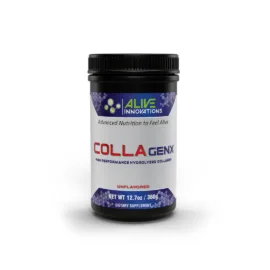
Collagen
Skin, joint, and connective tissue structural support
About Collagen
Collagen is the most abundant protein in the human body, forming the structural scaffolding of skin, bones, tendons, ligaments, cartilage, blood vessels, and connective tissue. It is a fibrous protein composed primarily of glycine, proline, hydroxyproline, and arginine — amino acids that provide the tensile strength and elasticity that allow biological structures to resist stress while remaining flexible. Natural collagen synthesis begins declining in early adulthood, typically dropping by about 1 percent per year starting in the mid-twenties.
Why Alive 4 Health Uses Collagen
CollagenX was designed as a comprehensive structural support supplement for the full body — hair, skin, joints, muscles, and ligaments — rather than a narrowly focused single-type formula. Alive4health's formulation recognized that different connective tissues require different collagen types and that a truly supportive collagen supplement should address the body as an interconnected whole. LIGX provides targeted collagen support for ligament and tendon integrity specifically.
How Collagen Decline Affects Skin Hair Joints And Recovery
This gradual decline in collagen production is reflected in increasingly visible skin changes — reduced plumpness, slower wound healing, fine lines — as well as joint stiffness, reduced tendon and ligament resilience, and slower recovery from physical activity. Collagen supplementation, particularly in the form of hydrolyzed collagen peptides, has been extensively studied for its ability to stimulate fibroblasts when absorbed as bioactive peptides. Multiple randomized controlled trials have demonstrated improvements in skin elasticity and hydration over 8 to 12 weeks of consistent use.
Types Of Collagen And What Each One Supports In The Body
Type I collagen is the primary structural collagen in skin, tendons, ligaments, and bones — most relevant for skin firmness, hydration, and wound healing. Type II collagen is the main component of cartilage and most directly relevant to joint health and comfort. Type III collagen works alongside Type I in skin and blood vessels, contributing to elasticity and resilience. A comprehensive formula like CollagenX provides multiple collagen types to address the full spectrum of structural needs.
Showing the single result